The Story of Rosenda Strong
Rosenda Sophia Strong was more than a headline.
She was a mother of four, a sister, a daughter, and a proud citizen of the Confederated Tribes of the Umatilla Indian Reservation, with deep ties to the Yakama Nation. Those who loved her describe her as funny, fiercely loyal, and the kind of woman who made everyone around her feel included. She loved to cook for her family, tease her siblings, and be present for her kids. She was only 31 when she vanished.
But what happened to Rosenda reveals something bigger than one woman’s story. It exposes a crisis that has stolen thousands of Indigenous women, girls, and Two-Spirit people from their communities — and too often, from public attention.
The Night She Disappeared
On October 2, 2018, Rosenda told her sister she was heading to a friend’s house near Toppenish, Washington, not far from the Yakama Reservation. She never came home. Her family reported her missing to the authorities, but like so many families of missing Indigenous women, they were met with silence and confusion.
Days turned into weeks. Weeks turned into months. The Strong family organized their own searches, put up flyers, and begged for updates that rarely came.
Her sister Cissy Reyes became the loudest voice — calling local police, speaking to media outlets, and refusing to let her sister’s name fade into another unsolved case file.
“If I stop talking about her, who will?” Cissy said in one interview. “My sister deserves to come home. She deserves justice.”
The Discovery No Family Should Face
On July 4, 2019, after nine months of unanswered questions, two men searching through a field near Toppenish came across something that didn’t belong. An old, unplugged freezer, abandoned behind a house.
Inside were human remains. Dental records confirmed what the Strong family already feared — it was Rosenda.
It was a horrifying discovery, but even that didn’t bring immediate answers. The investigation unfolded slowly, with multiple suspects, conflicting accounts, and years of uncertainty.
The Investigation and Federal Trial
Eventually, federal prosecutors pieced together what they believe happened that night.
Rosenda had gone to a residence locals called the “House of Souls,” a known party spot. Witnesses said an argument erupted between Rosenda and Jedidah Iesha Moreno. At some point, Moreno allegedly shot her and enlisted others to help hide the body.
Instead of calling for help, they loaded Rosenda’s body into a freezer, sealed it shut, and dumped it on the reservation. Months later, the truth surfaced — literally.
Over the next few years, a series of arrests and plea agreements followed.
- Jedidah Moreno was charged with second-degree murder.
- Michael Lee Moody received an 87-month federal sentence for being an accessory after the fact — helping dispose of Rosenda’s body.
- Jamaal Antwan Pimms was sentenced to 26 months for concealing information and misleading investigators.
While these sentences brought some measure of justice, they also revealed the cracks in the system — how long it took to act, how few resources were allocated early on, and how many families are left to do the investigating themselves.
A Sister’s Relentless Fight
Cissy Strong Reyes has become one of the strongest voices for the Missing and Murdered Indigenous Women movement in the Pacific Northwest. She has attended vigils, testified at public events, and helped families going through the same nightmare.
“The hardest part,” she said, “is knowing my sister called them her friends. That trust killed her.”
For Cissy, the fight isn’t just about accountability — it’s about awareness. She’s worked with groups like MMIW USAand The Red Ribbon Skirt Society, and she keeps Rosenda’s story alive at every gathering, every rally, every interview.
Why Rosenda’s Story Matters
Rosenda’s story reflects a tragic pattern.
Indigenous women and girls are ten times more likely to be murdered than the national average, according to the U.S. Department of Justice. Many disappear without a trace. Others, like Rosenda, are found after months or years — long after their families were told to “be patient.”
Her case underscores the urgent need for better data collection, cross-jurisdictional cooperation between tribal, state, and federal law enforcement, and culturally competent victim support.
For the Strong family, justice doesn’t end with convictions. It means reform. It means action. It means never letting Rosenda’s name disappear again.
Where You Can Go From Here
- Listen to the full Vanished Voices episode: The Story of Rosenda Strong
- Share Rosenda’s story and keep the conversation about MMIW alive
- Support organizations like the National Indigenous Women’s Resource Center, StrongHearts Native Helpline, and Not Our Native Daughters
- Contact your representatives and tribal leaders to demand stronger action on the MMIW crisis
Because awareness is the first step toward justice — and silence has already stolen too much.
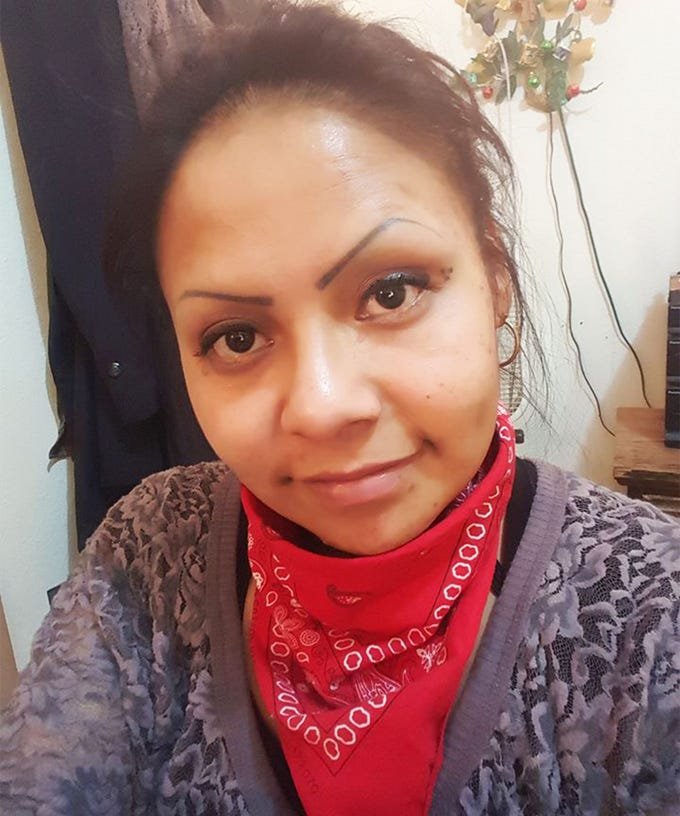
Photo curtesy of Rosenda Strong’s Facebook
Author’s Note
Writing about Rosenda Strong is heavy. Not because her story is unique, but because it shouldn’t be common. She was loved. She had people waiting for her, fighting for her, calling her name long after others stopped listening. Her sister Cissy’s strength — her refusal to be silent — is what keeps this story alive, and what makes Vanished Voices exist in the first place.
Rosenda’s story is not just one family’s loss; it’s a mirror of a crisis that continues to ripple through Indigenous communities, often met with indifference or delay. Every time a case like this fades from public attention, another life risks being forgotten.
So, if you’ve listened to this episode, shared her name, or learned something new today — you’re part of the change Rosenda’s family has been fighting for. Let’s keep saying her name. Let’s keep amplifying Indigenous voices. And let’s make sure that stories like hers are met with action, not silence.
Because remembrance is powerful — but justice is louder.
Have thoughts on this story or other cases you’d like to see highlighted? Share them with us in the comments or connect with us on social media. Together, we can ensure that stories like this one are never forgotten.
Don’t forget to follow us on social media, @VanishedVoicesPod, share your thoughts, and let us know what you’d like to hear about in future episodes. If you have any true crime stories of your own, send them our way Vanishedvoicespodcast@gmail.com to be featured on a future episode! And as always, refuse to let these voices vanish. See you in the next episode of Vanished Voices.
Resources
- National Indigenous Women’s Resource Center – MMIW Toolkit & Resources NIWRC
- StrongHearts Native Helpline (24/7 culturally-appropriate support)
Office for Victims of Crime - Association on American Indian Affairs – Survivor Resources & Toolkits Association on American Indian Affairs
- Not Our Native Daughters (advocacy & awareness) Not Our Native Daughters
- Lakota People’s Law Project – MMIW Resource Guide lakotalaw.org
- The Vanished (Yakama Reservation missing persons project)
Yakima Herald-Republic - U.S. Bureau of Indian Affairs – Missing and Murdered Indigenous People (MMU) bia.gov
- Missing and Murdered Indigenous Women & Girls: A Snapshot of Data from 71 Urban Cities — Urban Indian Health Institute UIHI
- Missing and Murdered Indigenous Women & Girls Report — Urban Indian Health Institute (PDF) UIHI
- Missing or Murdered Indigenous Women: New Efforts Are Underway — U.S. Government Accountability Office U.S. Government Accountability Office
- Missing and Murdered Indigenous People (MMIP) — Congressional Research Service Report Congress.gov
- Final Report: The National Inquiry into Missing and Murdered Indigenous Women and Girls (Canada) — Canada’s Final Report with Calls for Justice MMIWG FFADA
- The Silent and Often Invisible Crisis of Missing and Murdered Indigenous Women & Girls — National Partnership National Partnership
- Reports on Violence Against Indigenous Women Are Gone from Federal Sites — 19th News (investigative) 19th News
- Michael Lee Moody Sentenced to Federal Prison for His Role in the Murder of Rosenda Strong — U.S. Department of Justice
- Jamaal Antwan Pimms Sentenced to Federal Prison for His Role in the Murder of Rosenda Strong — U.S. Department of Justice
- Man Involved in Murder of CTUIR Member Goes to Prison — East Oregonian
- Man Sentenced in Death of Woman Killed, Put in Freezer: Feds — The News Tribune
- Yakima Man Sentenced to Over Two Years in Prison for Aiding in 2018 Murder of Rosenda Strong — NBC Right Now
- Man Connected to 2018 Murder of CTUIR Member Goes to Prison — East Oregonian
- Man Sentenced as Accomplice After Rosenda Strong Murderer Was Slain — KIMA TV